
Our Process
Pre-Construction
The planning phase produces documents, not intentions: tickets, pothole records, a bore profile, an issued permit, a traffic control plan, and a confirmed start date.
Pre-construction is the work that happens before the drill rig starts: Sunshine 811 tickets, utility locates and potholing, bore path planning, permit acquisition, maintenance of traffic planning, a site walkout, a safety briefing, and a confirmed schedule. Strilla Communications treats it as documented work, because most field failures are planning failures.
Planning Is Where Risk Gets Removed
Every bad outcome in outside plant construction has a planning ancestor. A utility strike traces back to an unverified locate. A stop work order traces back to a permit condition nobody read. A week of standby traces back to a schedule that was never confirmed with the agency.
Pre-construction is the phase where those failures are still cheap to fix. It is the first step of our 5 step process, Locate and Plan, and it ends with a set of records rather than a set of assumptions on a directional drilling, conduit, aerial, or full outside plant scope.
Sunshine 811 Tickets and Utility Locates
All excavation in Florida runs through Sunshine 811 under Chapter 556, Florida Statutes. Notice of not less than 2 full business days is required before excavation begins, and we file tickets against the actual dig area rather than a vague description, because a sloppy ticket produces sloppy marks.
We confirm positive response from every affected facility owner before ground is opened. A ticket that has not been responded to is not a cleared ticket, and no rig starts against one.
Marks have a life span. When a ticket ages out, or marks are lost to weather or traffic, we re-notify instead of assuming, and the refresh is logged so the record shows which marks the crew was working from.
- Ticket filed for the specific dig area, with limits that match the bore or trench rather than the whole project
- Positive response confirmed from every affected facility owner before ground is opened
- Private locates arranged for facilities outside the 811 system, including customer owned services, site lighting, and irrigation
- Ticket numbers carried into the daily report so each day of work ties to the locate in force
Potholing and the Tolerance Zone
Paint marks tell you roughly where a facility is horizontally. They do not tell you depth, and depth is exactly what a bore path needs. We pothole with vacuum excavation at crossings and anywhere the design profile passes near an existing facility.
The Florida tolerance zone extends 24 inches on either side of the outside edge of a marked facility, and vacuum excavation or hand digging is what applies inside it. Treating that zone as a rule rather than a suggestion is the most effective damage prevention practice available on a drilling job.
Each pothole is recorded with location, depth, facility type, and a photograph. Those records feed the bore profile and carry into the closeout package.
Bore Path Planning
The bore path is planned in profile, not just in plan view. Entry and exit points, setback from the pavement edge, depth at each crossing, clearance from potholed facilities, and the rod path required to hit the exit are worked out before the rig is loaded.
Soil drives much of the plan. Volusia County and Central Florida present sand, organics, clay lenses, a high water table, and occasional limestone, and each changes fluid selection, steering behavior, and realistic shot length. Planning for the soil you actually have is what prevents inadvertent returns and lost product.
Permits and Agency Coordination
Permit acquisition is part of our scope unless the client is carrying it. We identify every permitting authority a route touches, which on one route can include FDOT, county public works, a city engineering department, a water or drainage authority, and a railroad or private utility owner.
Permit conditions get read and carried into the field plan rather than filed and forgotten. Allowed work hours, lane closure restrictions, seasonal or event restrictions, minimum cover, restoration standards, and inspection notice requirements all change how the work is staffed and sequenced.
We confirm the permit is issued and its conditions are understood before mobilization. A crew standing in a right of way waiting on an unissued permit is the most expensive kind of idle time.
Maintenance of Traffic Planning
Work in a right of way needs a traffic control plan that matches the actual roadway. Lane configuration, posted speed, sight distance, pedestrian and bicycle routes, driveway and business access, and school or transit patterns all shape the setup.
Plans follow the MUTCD and Florida DOT temporary traffic control standards, and the permit usually specifies which typical application governs. Devices, signing, and flagging are staged in advance so the setup on day one matches the plan on paper.
Pedestrian accommodation gets specific attention because it is the most common inspection finding. When a sidewalk is closed, an accessible route is provided.
Pre-Construction Walkout
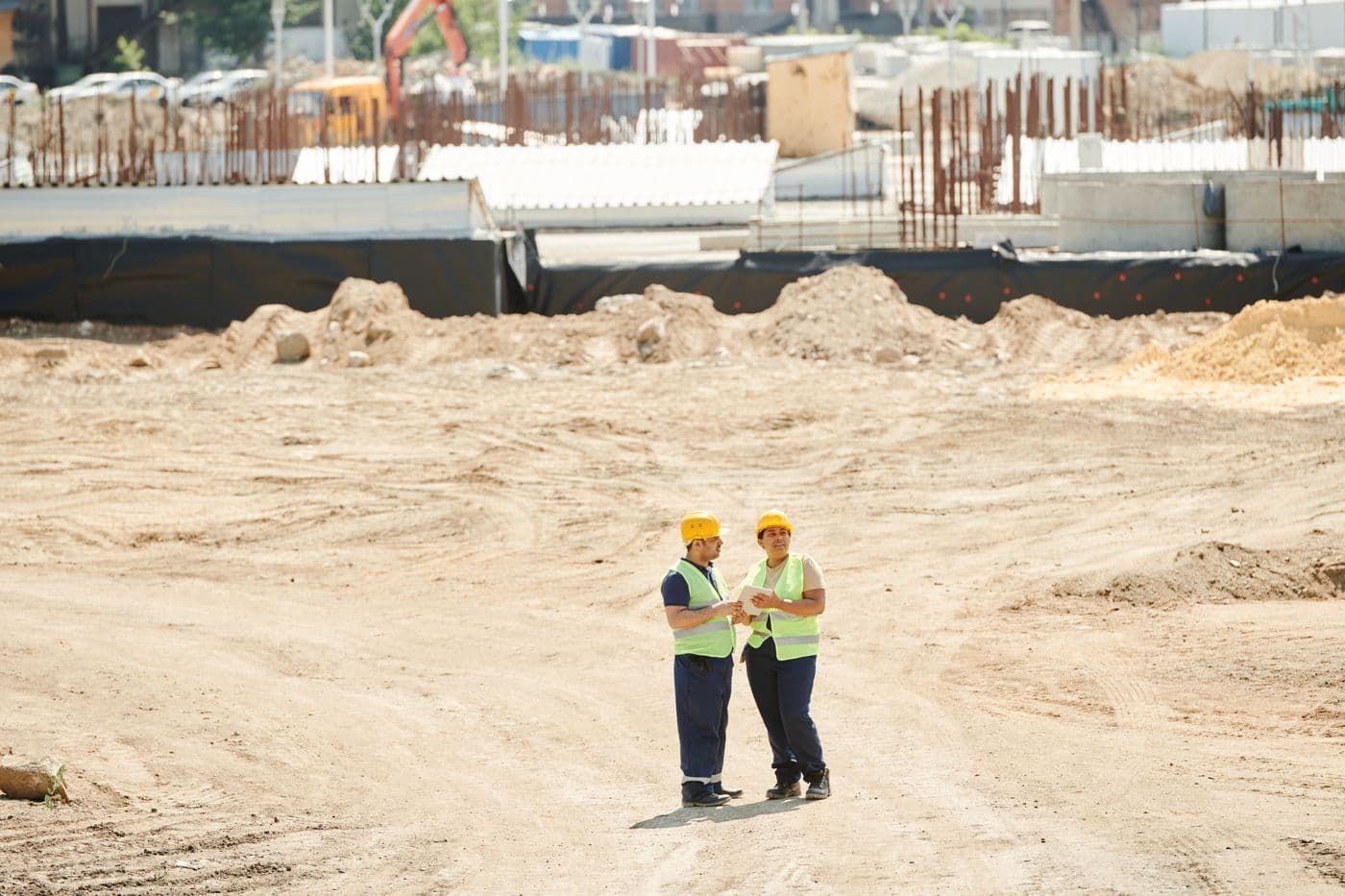
We walk the route with the client before mobilization whenever scope and schedule allow. Existing conditions are photographed: pavement, sidewalk, curb, sod, irrigation, landscaping, driveways, mailboxes, and any damage that is already there.
That existing conditions record settles restoration disputes before they start. When a property owner reports a cracked driveway apron at the end of the job, the walkout photos answer the question instead of opening an argument.
The walkout is also where field reality gets compared to the design. Access constraints, staging locations, tree canopy affecting aerial work, and conflicts the desktop review missed are found while the plan can still change cheaply.
- Existing conditions photographed along the full route before any equipment arrives
- Access, staging, spoil handling, and drilling fluid management locations agreed
- Design conflicts, access constraints, and canopy or clearance issues flagged in writing
- Restoration expectations confirmed against the permit standard for each surface type
- Points of contact confirmed for the client, the agency inspector, and the crew foreman
Safety Briefing and Schedule Confirmation
Work starts with a documented briefing covering the hazards of that specific site: traffic exposure, overhead power, the facilities identified by the locates, heat, and the emergency plan including the route to the nearest hospital.
Briefings continue daily on site, but the pre-construction version is where crew roles, the electrical contact procedure, the utility damage procedure, and stop work authority get established. Anyone on our crew can stop work. That is how a damaged facility stays a near miss instead of an outage.
Schedule confirmation closes the phase. Start date, crew size, expected daily production, agency inspection notice requirements, and any client access or escort requirements are confirmed in writing so nobody is guessing about Monday morning.
Communication Setup
Before work starts you get a single point of contact and an agreed reporting rhythm. One name and one number for schedule, production, field changes, and escalation, rather than a different person every time you call.
The daily reporting format is set here as well: what gets reported, to whom, and by when. If you need production loaded into a specific tracker, or a naming convention on photos and as-builts, that is a pre-construction decision rather than a closeout surprise.
Call (386) 396-2033 or email hello@strillacommunications.com to start the pre-construction conversation on a Volusia County, Central Florida, or statewide scope.
Key takeaways
- Pre-construction is the Locate and Plan step, and it ends with records: locate tickets, pothole data, a bore profile, issued permits, a traffic control plan, and a confirmed start date.
- Florida law requires notice to Sunshine 811 at least 2 full business days before excavation, but agency permit review usually sets the real start date.
- Paint marks show where a facility runs horizontally but not how deep it is, which is why every crossing on a bore is potholed before drilling.
- Existing conditions photographs taken at the walkout settle restoration disputes before they start.
Key terms
- Sunshine 811
- Florida's one call notification center for underground utilities, established under Chapter 556, Florida Statutes. Excavators file a ticket describing the dig area at least 2 full business days before digging, and member utilities mark their facilities or report that they are clear of the work.
- Potholing
- Exposing an existing underground utility, usually with vacuum excavation, to confirm its actual depth, size, and alignment. Potholing turns a horizontal paint mark into a verified position, which lets a bore path be planned with known clearance instead of an assumed one.
- Bore profile
- A side view drawing of a planned directional bore showing entry and exit points, depth along the path, bend radius, and clearance from each crossed facility. It is built from pothole data, permit depth requirements, soil expectations, and the product being installed.
- Existing conditions record
- Photographs and notes of a route taken before construction, covering pavement, sidewalks, curbs, sod, irrigation, driveways, and any damage already present. It becomes the baseline for restoration, so the finished condition can be compared directly with what was there before.
| Planning output | What it prevents | Who relies on it |
|---|---|---|
| Sunshine 811 ticket with positive response | Digging into unmarked or unconfirmed utilities | Crew, facility owners, client |
| Pothole records | Bores planned against assumed depths | Drill operator, locator, as-built team |
| Bore profile | Shallow crossings and lost product | Crew, agency inspector |
| Issued permit with conditions read | Stop work orders and idle crews | Crew, agency, client |
| Traffic control plan | Unsafe setups and inspection failures | Crew, agency, public |
| Existing conditions photos | Restoration disputes at closeout | Client, property owners, inspector |
What this means for your project
Pre-construction is where risk is cheapest to remove. An unverified locate, an unread permit condition, or an unconfirmed start date costs a phone call to fix during planning. The same problem found after mobilization costs crew standby, a stop work order, or a utility strike, and each of those lands on your schedule and budget.
It also sets up the records you will need at the end. Ticket numbers, pothole data, and existing conditions photos collected now become part of the closeout package, so your as-builts, restoration acceptance, and any damage claim defense rest on data gathered before the first rod went in.
Related reading
- Bore path planningHow a bore profile is built from pothole data and soil.
- Florida soil and permittingGround conditions and agency processes across the region.
- Project readiness checklistWhat should be confirmed before a crew mobilizes.
- Safety and damage preventionTolerance zone, positive response, and stop work practices.
- The next stage: during constructionWhat happens once the crew is on site.
- Our five step processHow pre-construction fits the full project lifecycle.
Frequently Asked Questions
- How far in advance should pre-construction start?
- That is driven by the permitting authority more than by us. Florida requires at least 2 full business days of notice to Sunshine 811, but agency permit review commonly runs much longer, and a route crossing several jurisdictions follows the slowest one. Start the conversation as soon as the route is known.
- Do you handle permits, or does the client?
- Either arrangement works. We handle permit acquisition and agency coordination on many scopes, and we also work under client held permits. What matters is that responsibility is assigned in writing before mobilization, including who carries permit driven schedule delay and who closes the permit at the end.
- What happens if locates are wrong or missing?
- Work stops in that area. We re-notify, request a re-mark, and pothole to confirm before proceeding. A questionable locate is treated as an unlocated facility, and the discrepancy is written into the daily report so the record shows what was found and when.
- Is potholing included in a directional drilling scope?
- Yes, it is priced into the scope wherever a bore crosses existing facilities, because a bore planned without verified depths is a guess. If a client wants potholing reduced or removed, we confirm that in writing and note what risk moves with it.
- What do we need to provide before pre-construction starts?
- Send the design or construction prints, the route limits, any permits you already hold, your acceptance and documentation standards, and the target schedule. Easement documents, pole attachment approvals, and owner contacts help as well. The more of this arrives up front, the faster we can file tickets, apply for permits, and give you a schedule with real dates instead of assumptions.
- Will you walk the route with us before construction?
- Yes, whenever scope and schedule allow, and we recommend it. The walkout photographs existing conditions along the full route, confirms staging and access, and compares the design with what is actually in the field. It is also where restoration expectations are agreed for each surface type, which prevents disputes about driveways, sod, and sidewalks at the end of the job.
Related services
- Bore Path PlanningBore path planning for Florida HDD projects: alignment, depth profile, entry and exit points, utility clearance, and bend radius checked before mobilizing.
- Directional DrillingTrenchless directional drilling for fiber and utility conduit across Volusia County and Central Florida, planned against verified locates and closed out with documented bore logs.
- Horizontal Directional Drilling (HDD)HDD crews for fiber and utility conduit across Volusia County and Central Florida. Pilot bore, reaming, and pullback with logged depth and as-built records.
- Conduit InstallationHDPE duct, innerduct, and microduct placed by bore, trench, or plow, proofed with a mandrel, and made locatable with tracer wire and marker tape.
- Make-Ready SupportField survey, documentation and coordination support for pole make-ready, with honest reporting when make-ready is the item holding your schedule.
- Outside Plant ConstructionTurnkey OSP construction that carries a fiber build from permitting and boring through aerial, splicing, restoration, and a documented closeout.
Request a Bid
Ready to start your next directional drilling or fiber project?
Send the scope and we will come back with a clear, documented bid. Owned crews, aerial and underground under one contract, and a closeout package that lets you close the file.
Most bid requests receive a response within one business day.